


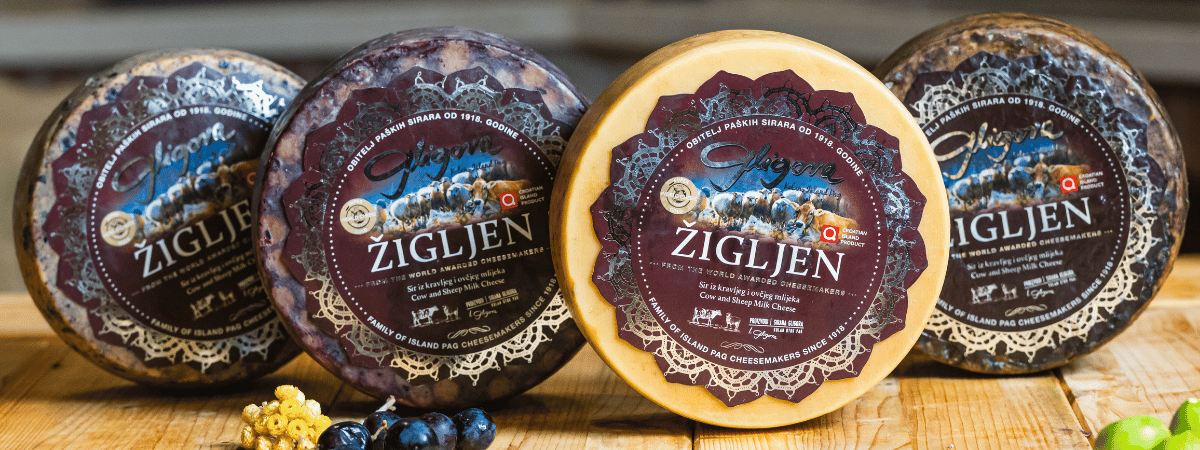
When you first hear the term affined cheese, it sounds refined and exclusive, like something reserved for fine dining restaurants and seasoned foodies. The word itself comes from the French affinage (meaning aging, refining, or finishing), but the story behind it is pure Dalmatian heritage born out of hardworking farm life. It is the art of turning an already good cheese into something truly extraordinary.
In most cheesemaking, the story ends the moment the cheese comes out of its mold and is salted. With affinage, the real work is only just beginning.
What Does "Affined Cheese" Actually Mean?
Affinage is the process of controlled aging where an affineur (master of aging) actively cares for the cheese every single day, guiding the development of its flavors, aromas, and textures. The cheese isn't just left forgotten on an aging room shelf.
Over weeks or months, its rind is treated with natural ingredients, coated or steeped in local products that slowly impart their unique aromas and flavors. Through this process, the cheese develops a deeper taste, the rind takes on its signature color and texture, and the layer right beneath the edge becomes wonderfully rich and creamy.

How It All Began: Saving Cheese from the Summer Heat
Today, we consider affined cheese a delicacy, but our ancestors didn't do this out of gastronomic fashion. They did it to survive and save precious food.
After a hot Dalmatian summer and months of dry air, cheese kept in cellars would dry out until it became hard as a rock. It was too dry to eat comfortably, crumbling and tough to chew. As autumn approached, one major question arose: how do you restore moisture to this hard cheese without spoiling it?
Naturally, you couldn't just soak it in water, because water would make it soggy, rot, and ruin it. It called for natural biochemistry.
Someone in the past (partly out of necessity, partly out of sheer curiosity) decided to submerge these dry wheels into grape must or wine pomace (known locally as pajca). The natural acids and alcohol from the grapes worked a small miracle: they slowly penetrated the rind, brought back much-needed moisture, softened the texture, and imparted a delightfully pleasant tanginess.
Alongside this comes the famous legend of hiding cheese. Farmers often had to conceal their valuable cheese from tax collectors and invading armies, and barrels of grape must and pomace made the perfect hideout. When the danger passed and they pulled the cheese out, they realized that instead of spoiling, it had turned into a true delicacy!

Our Story with Pomaces
Tradition called for grape must and wine pomace, and at Sirana Gligora, we still honor that tradition with immense respect. But at a certain point, we decided to see what would happen if we applied that same age-old logic to other local treasures. That is how our two signature affinages were born, creations you won't find anywhere else in the world:
- Olive Pomace: Olives and cheese belong together on the plate, so why not in the aging room? When our cheese ages coated in olive pomace (the solids left after pressing olive oil), the rind acquires a dark, earthy color, while the cheese itself absorbs pleasant nutty notes and the fresh aroma of an olive grove.
- Maraska Cherry Pomace: This is our homage to the Zadar region. After the famous Zadar Maraska cherries are processed to make Maraschino liqueur, what remains is a pomace rich in aroma and natural fruit acids. Aging cheese in this pomace gives it a unique fruit freshness and a subtle, noble trace of Maraschino.

At Gligora, we approach affinage with special care, which is why these cheeses are produced in strictly limited quantities. Every year, we set aside only a select, limited amount of cheese destined for aging in pomace, making them a true delicacy and an exclusive catch for cheese lovers.
How to Properly Enjoy Affined Cheese
Cheeses like these deserve a little patience and a few simple rules:
- Don't eat it straight from the fridge. Take it out at least 30 to 45 minutes before serving so it can relax and unleash its full aroma.
- Cut it so every slice includes some rind. The most fascinating aging transformation happens right beneath the edge, and it would be a shame to trim it off!
- Pair it right. Cheese aged in grape must loves bold red wines. Olive pomace cheese pairs beautifully with top-quality olive oil and warm bread. Meanwhile, Maraska cherry pomace cheese pairs fantastically with dried figs, walnuts, and naturally, a small glass of premium Maraschino.
Ready for a taste?
Now that you know the story behind the unique rind and rich flavor, it's time to taste it for yourself. Explore our range of affined cheeses HERE and find your favorite flavor!


 PDO
PDO


